How to make a wedding mood board your suppliers will actually understand
A wedding mood board is a single page of images that shows the atmosphere of the day, its colours, materials, light and flowers, not a collection of everything you like. It works when it is short and consistent: usually ten to fifteen chosen images, colour swatches and the couple's key words. Before you send it to suppliers, remove every image that would need an explanation.
A mood board without a bride
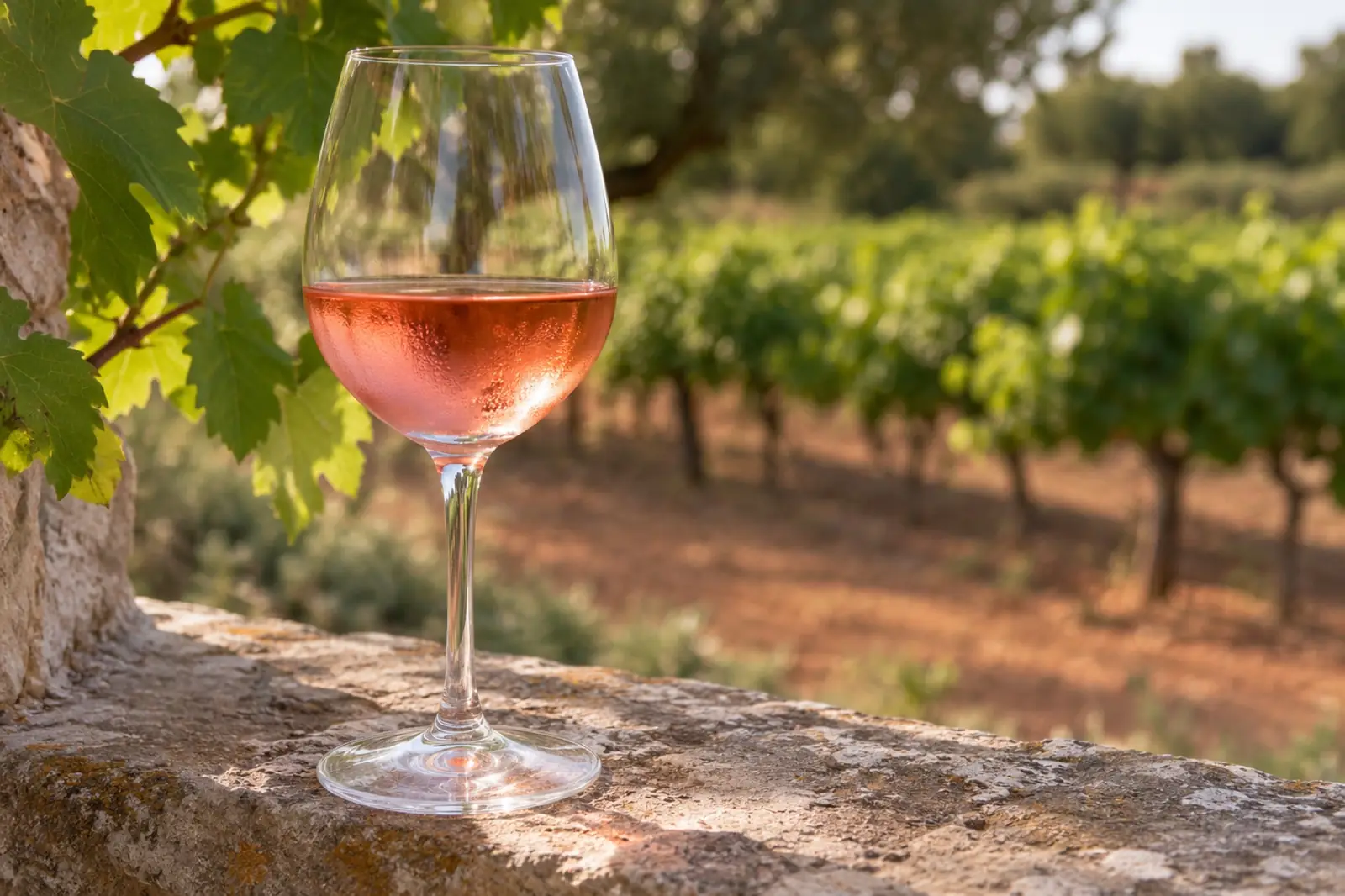
A glass of rosé resting on a stone wall, an olive branch with the olives still green, a scrap of oat-coloured linen. Sometimes the clearest mood board you can bring to a florist does not contain a single bride. It contains an atmosphere: the colours, the materials, the light, the way you want your wedding to feel.
A mood board is a sheet, on paper or on screen, with the images that describe your wedding before it exists. It comes straight after the wedding concept, the three words that describe the day: the mood board makes them visible. If you are planning a wedding in Puglia from another country, it is also your best translator. A florist in Andria and a photographer from London read the same picture in the same way.
Curate, do not collect
The most common mistake is the endless board: hundreds of pictures saved over months of evenings on the phone, with everything and its opposite. A supplier who receives it does not know where to begin, and ends up choosing for you. A mood board is for taking things away, not adding them.
My rule: one page, understood in ten seconds. Ten to fifteen images are usually enough. If two photos say the same thing, keep one. If a photo needs an explanation (‘I only like the ribbon, not the flowers’), take it out, or crop it down to the ribbon.
What to put on it
- An anchor image, in the centre or at the top: the one that sums everything up. The others gather around it.
- Colours as swatches, three plus the neutrals, as solid squares: a colour described in words (‘sage green’) is imagined differently by everyone.
- Materials and textures: linen, glass, pale wood, stone, ceramics. They count as much as the flowers.
- Light: one photo at sunset, one in the evening by candlelight. It tells everyone at what hour your wedding lives.
- Images that are not of weddings: a dress, the corner of a house, a landscape, a dish. They often explain more than a hundred tables you have already seen.
- Your words, written small in a corner.
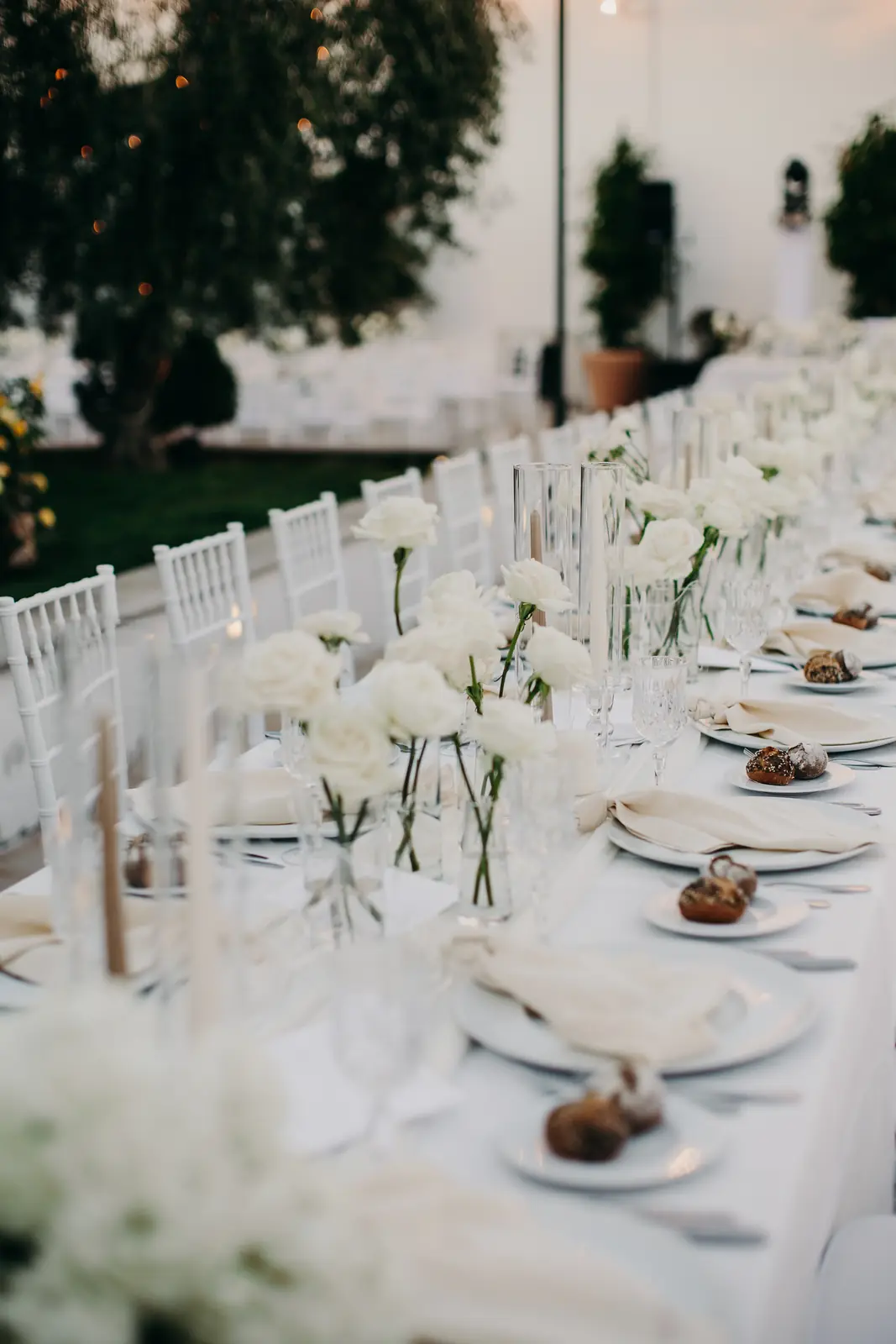
Yes: a sprig of olive, a crumpled linen tablecloth, a limewashed wall at sunset, a candle in glass. Better not: six different flower arrangements, all beautiful and all from different seasons, plus a wedding dress that is not yours.
A board that speaks to suppliers
Each supplier looks at it with different eyes, and rightly so. The florist looks for colours, shapes and season; the printer for typefaces, paper and colour; the photographer for light and style; whoever dresses the spaces for materials and heights. So keep one shared board, the same for everyone, and perhaps an extra sheet each with the details that concern only them. Two checks before you send it:
- The season. If there are peonies on your board and you are marrying in September, better to know now: the florist will suggest a flower with a similar shape and colour. Why this matters is in seasonal wedding flowers in Puglia.
- The place. The images must sit well beside what is already there. At the masseria, our 19th-century farm estate in northern Puglia, that means white walls, the pale limestone of the dry-stone walls, the silver-green of the Coratina olive trees and the sunset light on the hill. A board of blue velvet and gilded mirrors would quarrel with this landscape.
A living document, but a faithful one
The mood board changes over the months: a fabric you did not know turns up, the florist suggests a better flower. Updating it is fine, as long as every new image stays true to your starting words. If a new picture tempts you but pulls in another direction, put it in a separate folder; if in two weeks you still like it and it fits, it goes in.
The best images are often the ones you take yourselves. When you come to see the place, photograph the details that strike you: the stone, the green, a window, a corner of shade. Visits are by appointment: ask us for one and bring a charged phone, ideally at the hour of your ceremony, for the reasons Mario gives in sunset times for wedding photos. From the board you move on to the table and the stationery: with a good mood board they are much quicker decisions, for you and for everyone working with you.
- L'esperienza della famiglia Alicino con i matrimoni in masseria · Tenuta Montevitolo · novembre 2026
- Dati aziendali confermati dalla famiglia Alicino · Tenuta Montevitolo · settembre 2026