Seasonal wedding flowers and styling in Puglia: why the season comes first
Because a flower in season is fresher, copes better with the heat and has the colours of that month's light: styling that follows the season looks as if it grew in the place, while styling that forces it shows at once. Start from what the countryside and nearby growers offer in those weeks, and make everything work more than once: potted plants, arrangements that move from the ceremony to the table, natural materials you can reuse.
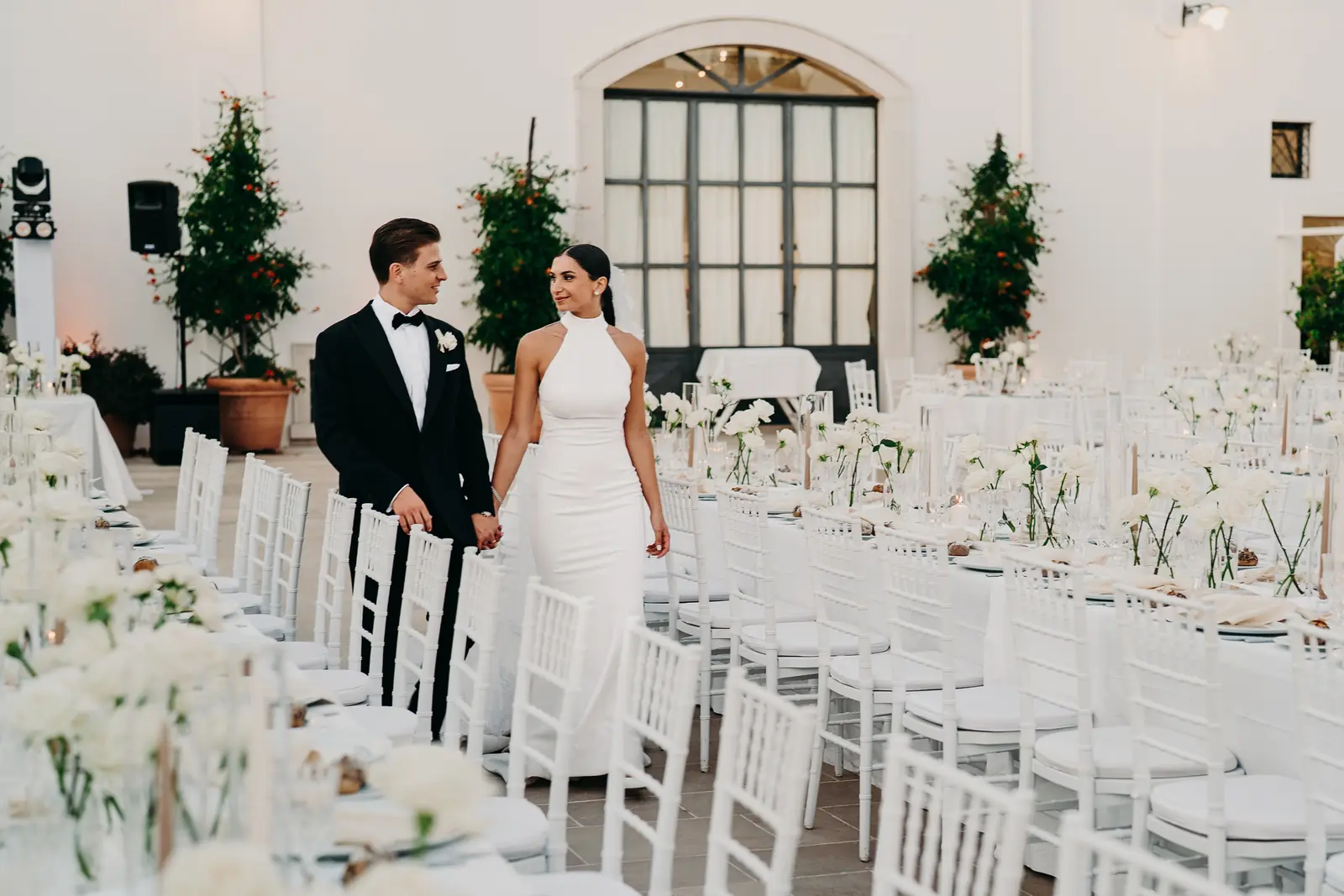
The season decides first
The powdery pink of a peony lasts a few weeks a year. The deep red of a split pomegranate belongs to September. The yellow of lemons still on the branch, with their leaves, belongs to the cooler months. When a couple asks me where to start with flowers and styling, my first question is not ‘what colour do you like?’ but ‘which month are you marrying in?’. At Tenuta Montevitolo, flowers and styling follow the season: for us it is a rule, not a trend.
The reasons are simple. A flower in season, grown not far away, arrives fresher, lasts longer and has not travelled for days in cold storage. In summer it copes better with the heat, because it grew in that climate. And it has the right colours for the light of its month: bright tones under the high sun of June, warm, burnished ones under the low sun of October.
What ‘in season’ means here
The masseria, a historic farm estate, is in the countryside of Andria in northern Puglia, inland on the Murgia plateau at about 340 metres: not by the sea, but among olive groves, vineyards and pale limestone. Summers are hot and dry, the light is strong, the skies are open. Each season the countryside offers materials that tell your guests at once where they are:
- Spring: olive branches (the olive trees flower in May), wild flowers, young aromatic herbs.
- Summer: sheaves of ripe wheat, lavender, the green of olive and vine, lemons.
- Late summer and autumn: grapes at harvest time, pomegranates, olive branches heavy with fruit.
- Winter: ripe citrus with its leaves, evergreens, bare branches and plenty of candles.
Yes: hydrangeas and lavender at a July wedding, dahlias and pomegranates in September. Better not: peonies in August, flown in from far away, which open too far within an hour under the Murgia sun. To choose the month itself, read the best time to get married in Puglia.
Summer heat, and what it asks of flowers
In a Puglia summer the only real issue is daytime heat, for guests and flowers alike. So in June, July and August we move everything towards the evening, and the flowers follow:
- Flowers in water wherever possible, in jars, bottles and vases.
- Arranged in the cool hours, early morning or late afternoon, never at midday.
- Kept in the shade until their moment, the bouquet included.
- Let the florist lead on what grows well that month: they know which flowers like the heat.
Every flower works twice
This is the easy rule to remember: every flower works twice. Before ordering, ask where each arrangement will go after its moment. Ceremony flowers move to the couple's table, beside the seating chart or near the cake. The bouquet goes back into a vase during dinner instead of lying on a chair. Potted citrus, small olive trees, rosemary and lavender mark the paths, then become gifts for parents, witnesses, whoever helped you. Herbs in small pots can be place card and favour at once. And at the end, cut flowers are given away, to grandmothers, aunts, anyone who wants a bunch to take home: just decide beforehand who handles it.
Yes: large vases of olive branches either side of the ceremony, moved beside the couple's table in the evening. Better not: an arch of flowers built for a half-hour ceremony and left behind when everyone has gone to dinner.
Materials that come back
Much of what styling needs can be hired rather than bought: glass vases, lanterns, candlesticks, wooden crates, linen tablecloths. Whatever you buy, choose it to keep: a ceramic vase for your home, a tablecloth for family lunches. Ask your florist two things. First, whether they use green floral foam, the block pushed into vases: it is plastic-based and cannot be recycled, so flowers in water or reusable supports such as wire mesh and flower frogs are better. Second, what happens to the arrangements at the end of the night. A good florist already has the answer. For paper, one menu per table and signs you can reuse: more in the wedding stationery suite.
The place and the kitchen do half the work
Much of a masseria is already dressed: the silver-green of the olive grove, the limestone of the dry-stone walls, the white of the walls, the trullo in the courtyard, Castel del Monte on the horizon. It does not need covering; it needs lighting and accompanying. The table follows the season too. The kitchen garden, tended by Michele Centrone, our massaro (the farm keeper), is fifty metres from the kitchen: in summer there are tomatoes and courgettes, and when a sauce is needed the cooks walk out and pick the tomatoes. Leonardo, our chef, tells it in what food is served at a wedding in Puglia.
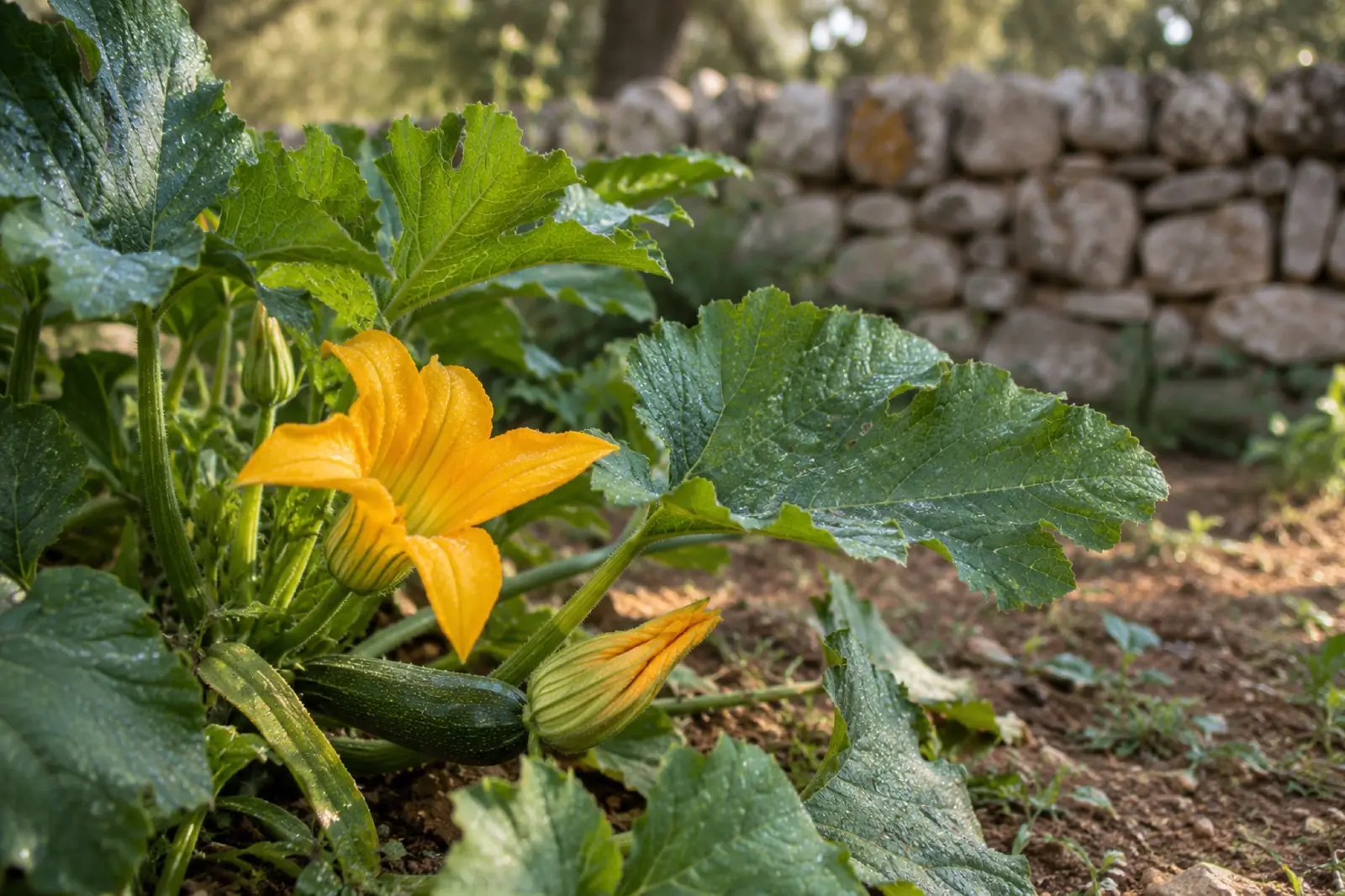
To know what the countryside offers in your season, tell us when you would like to marry: we will describe the olive grove and the vineyard in those weeks. And to build the look around it, start from your wedding concept.
- L'esperienza della famiglia Alicino con i matrimoni in masseria · Tenuta Montevitolo · novembre 2026
- Dati aziendali confermati dalla famiglia Alicino · Tenuta Montevitolo · settembre 2026