Wedding stationery suite: from invitation to menu, one consistent design
A wedding stationery suite is the set of printed pieces designed in one style: the invitation, the order of service, menus, place cards, table names, the seating chart and signs. It works when you choose little and repeat it: one paper, two typefaces, one motif. Invitations are prepared first, menus and the seating chart last, once guests have replied.
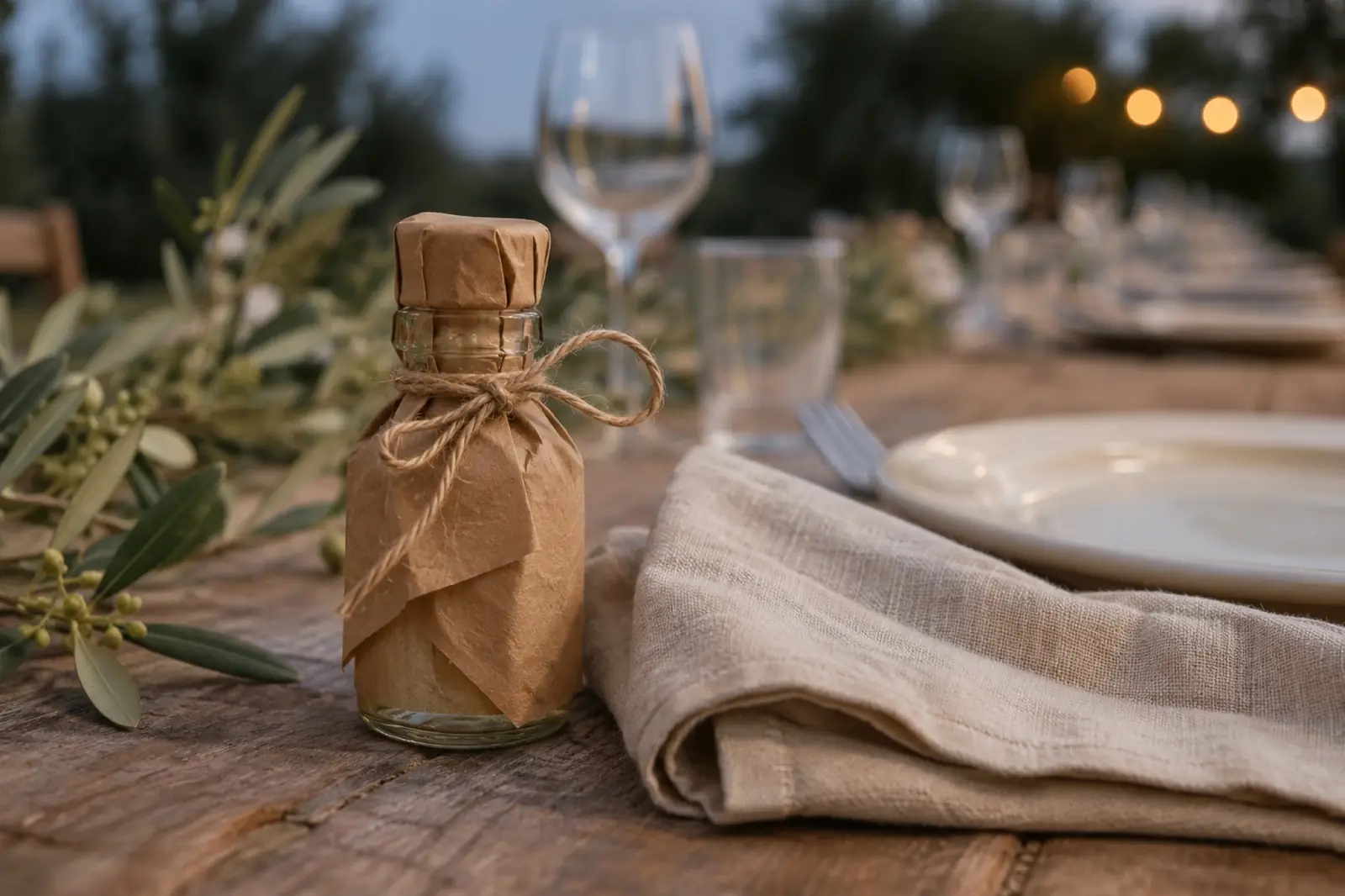
The rough white of cotton paper
The slightly rough white of cotton paper, its edges deckled as if torn by hand, and on it an olive sprig drawn in a fine line. This is how your guests first meet your wedding, months before the day: inside an envelope. And it is the first place where you can tell whether everything else will tell the same story.
The stationery suite is the set of printed pieces for the wedding, all designed in the same style. It is like a person's voice, which you recognise on the phone before they say their name: the same colours, the same typefaces, the same motif, from the invitation to the sign pointing to the dance floor.
What it includes
- The invitation. Italian tradition has two pieces: the partecipazione, which announces the wedding, and the invito, a separate card that invites guests to the celebration. Many couples now combine them on one sheet.
- The order of service, if you want to guide guests through readings and vows.
- The menu, one per place or one per table.
- Place cards and table names: a name at each seat, a number or a name for each table.
- The seating chart, the large board that tells everyone where to sit.
- Signs: welcome, directions, the favours corner, the dessert buffet.
- Favour tags, which close the circle.
You do not need them all. A few pieces made with care are better than ten different cards scattered around the courtyard.
One paper, two typefaces, one motif
This is the rule I leave you with, and it is easy to remember. One paper: the same for invitations and menus, so that guests recognise your wedding even by touch. Two typefaces: one more expressive for names and headings, a script if you like, and one plain and legible for everything else. One motif: a small drawing that returns everywhere. An olive sprig, a lemon, the outline of Castel del Monte, the castle we see on the horizon from the masseria, or your initials.
The colours come from your mood board, the tone from the words of your wedding concept. If your wedding is ‘bright, slow, family’, an invitation full of gold, mirror foil and gothic lettering tells a different story.
Yes: ivory cotton paper, names in a soft script, text in a clean typeface, a sage-green olive sprig on every piece. Better not: an invitation with four different typefaces, a menu on glossy paper and place cards in a third colour chosen at the last minute.
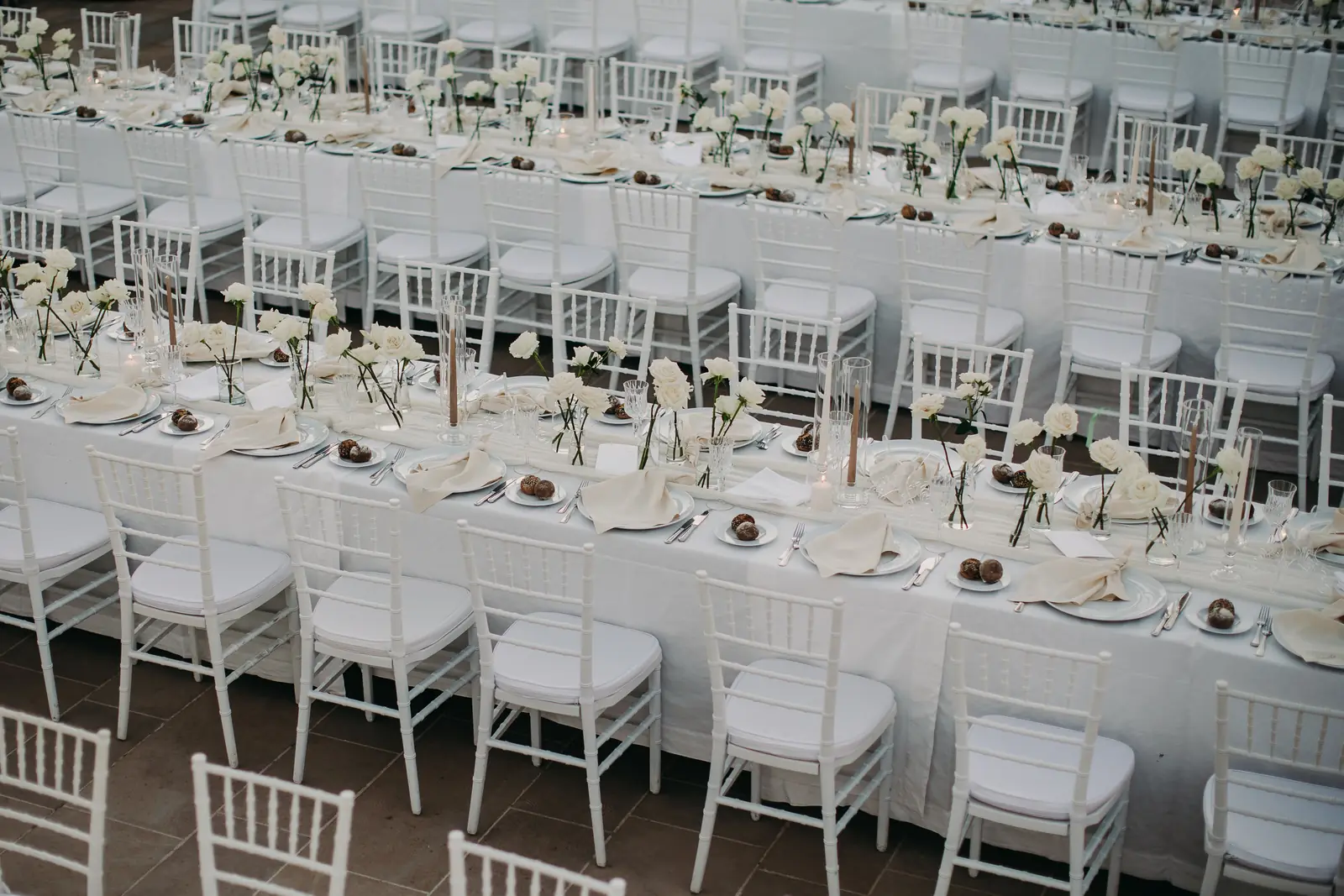
Legible before beautiful
The most elegant paper is useless if the names cannot be read. A few practical checks:
- Contrast: dark text on a light background. Pale grey on ivory disappears in the evening.
- Size: the menu is read at the table, the seating chart from a couple of metres, signs from further still.
- Script in moderation: lovely for a name, tiring for a whole menu, especially for grandparents.
- The breeze: outdoors, on our hill, light cards fly. Choose a good weight of paper, fix signs firmly, tuck menus under the plate or tie them to the napkin.
- The essentials on the invitation: date, time, place, who to reply to and by when. Everything else can live elsewhere.
- Two languages, if you need them: with guests from several countries, put both versions on the same card, in the same typefaces, rather than printing two suites.
When to prepare it
A suite is not printed all at once. Invitations go first: usually two or three months before the wedding, earlier still if many guests are coming from abroad and need to book flights to Bari. Ask the printer straight away about production times: letterpress, handmade paper and calligraphy take weeks. Menus, place cards and the seating chart are printed last, once the replies are in and the menu is settled.
Part of it now travels by phone. At the masseria every couple has a private area and an app for their guests: each guest receives a personal link, which you send on WhatsApp, and replies for themselves, with diets, allergies and shuttle requests. So the paper invitation needs only one line saying how to reply: the paper remains the keepsake, the link does the work.
If you are still looking for a date, the design can wait; free dates cannot. Tell us the period you have in mind and we will reply within two working days. To see how the paper reaches the table, next to flowers and candles, read how to set a wedding table; for how the rest of the day works, Vito explains it in a masseria wedding venue near Bari.
- L'esperienza della famiglia Alicino con i matrimoni in masseria · Tenuta Montevitolo · novembre 2026
- Dati aziendali confermati dalla famiglia Alicino · Tenuta Montevitolo · settembre 2026