New olive oil or last harvest's? How Coratina oil changes, and which to choose
New olive oil (olio nuovo) is the oil of the first months after the harvest: greener, more bitter and more peppery, because its polyphenols are at their peak. Stored well, oil stays extra virgin for many months, but its polyphenols slowly decline and the taste grows rounder and calmer. New oil is best raw, on bread, pulses and bitter greens; last harvest's oil is the everyday oil, cooking included.
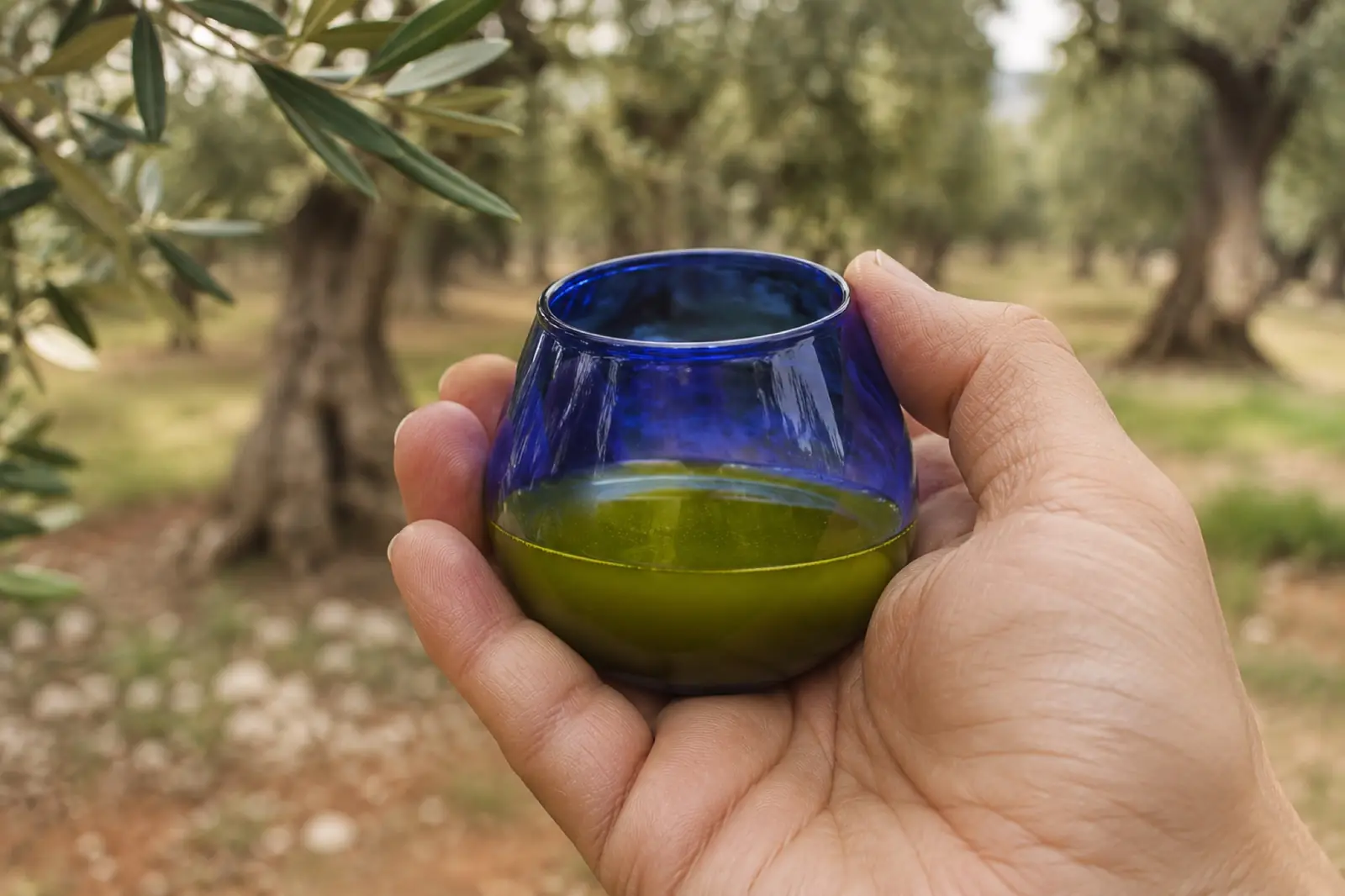
Two oils from the same trees
From November into winter, for a few weeks, our shop has two oils side by side: the one just out of the mill and the one from the previous year's harvest. Same olive groves, same mill. Taste them one after the other and they seem like two different oils.
The short answer is time. The long answer starts with the olive.
Before the mill: the land and the care
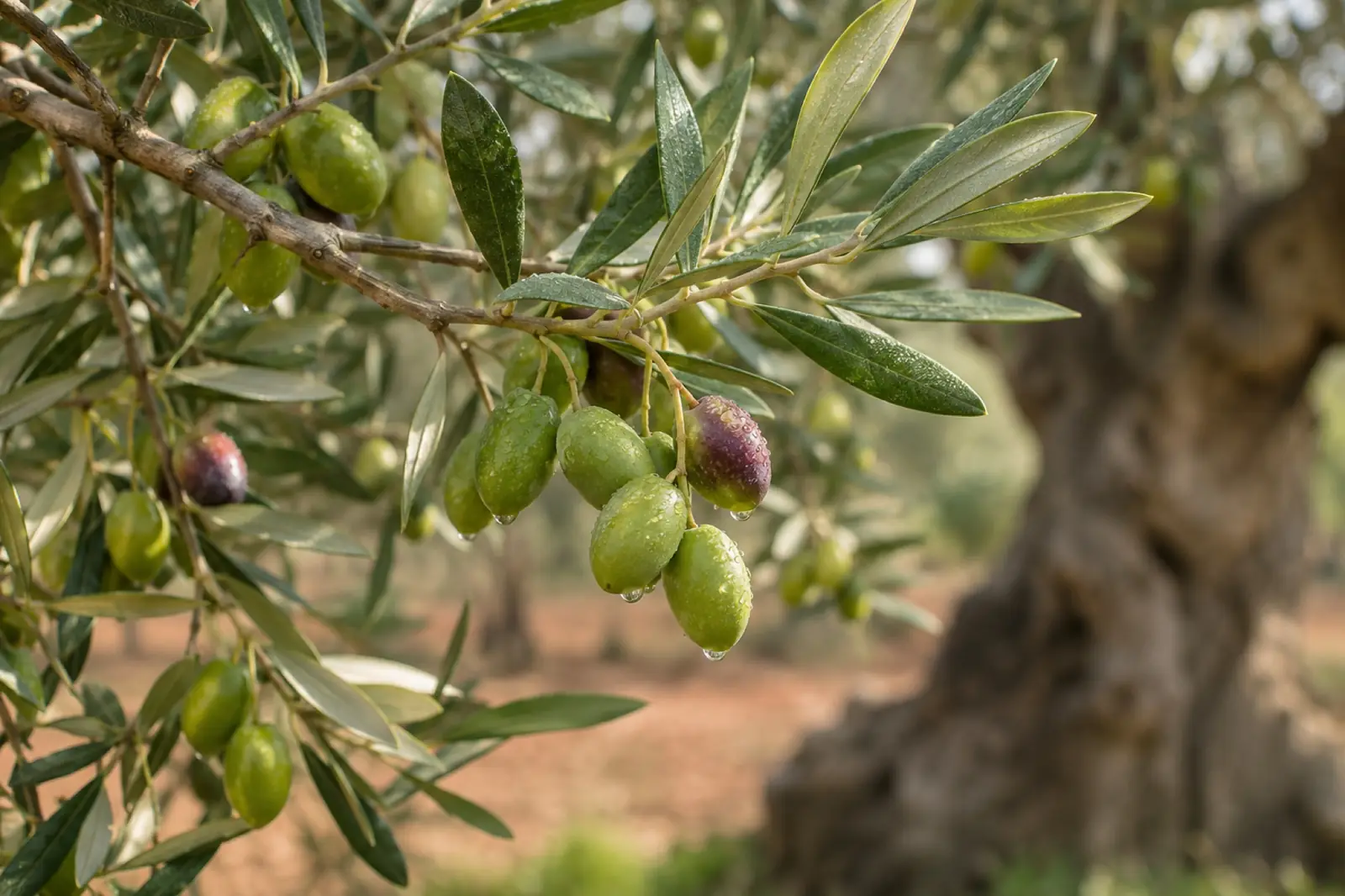
Our olive trees grow on the Murgia plateau in the countryside of Andria, northern Puglia, at around 340 metres, on land that reaches the Alta Murgia National Park, with Castel del Monte on the horizon. Many of the trees are centuries old. There is one variety only, Coratina, named after the town of Corato a few kilometres away.
We have farmed them organically since 1992, certified: no synthetic pesticides or fertilisers, prevention first, only the treatments organic rules allow. In January the trees are pruned by hand.
The mill: Industry 4.0, and the rule that never changes
The olives are picked while still green and cold-milled within a few hours in the family olive mill we built in 2024: an Industry 4.0 plant, with modern machines that make it possible to control each stage of processing precisely, designed also to use less energy and weigh less on the environment.
Technology does not change the rule; it helps us keep it: the olive must not wait, and the fruit is treated with respect. It is respect for tradition, as nonno Saverio taught us, with the highest quality that can be achieved today.
Why new oil is peppery: polyphenols
Bitterness and the tickle in the throat are not flaws. They are the sign of polyphenols, natural compounds of the olive that pass into the oil. Research links pungency mainly to oleocanthal and bitterness to oleacein.
Coratina is considered one of the richest varieties in polyphenols: published values range from a few hundred to over a thousand milligrams per kilo, depending on the year, the timing of the harvest and the method of analysis. Early-picked olives give more, which is why we pick green, even though green olives yield less oil. Polyphenols also protect the oil itself from oxidation, one reason Coratina keeps well.
An honest note: in the EU a producer may say that its oil's polyphenols are good for you only if a laboratory analysis of the batch passes a precise threshold set by Regulation (EU) 432/2012. So we will not give you figures by eye: we will publish a value for our oil when we have the analysis in hand.
What happens over the months
From the day it leaves the mill, oil slowly changes. Polyphenols decline: in a study of 160 extra virgin oils kept in the dark at 20 °C for a year, the average loss was around 40%, with large differences between oils. Pungency and bitterness soften with them. The oil is still extra virgin, with a different character: rounder and calmer.
- New oil · the first months after the harvest. Deep green, sometimes slightly cloudy. Cut grass, artichoke, green tomato. Decided bitterness, long pepperiness. Use it raw.
- Last harvest's oil · after the summer. More golden, softer aromas, gentler bitterness and pepper. The everyday oil, raw on delicate dishes and for cooking.
How to use each in the kitchen is explained by our chef, Leonardo Di Pinto, in cooking with Coratina olive oil.
Reading the label and storing it
On Italian extra virgin olive oil, look first for the harvest season (for example «2025/2026»): it tells you which harvest the oil comes from, more than the best-before date, which the producer sets, usually 12 to 18 months. At home, keep oil in the dark, cool (about 14–18 °C), closed and away from the stove. From a tin, pour what you need for a week or two into a dark bottle and close the tin again. Use new oil first: it changes fastest.
Which to choose
To taste Coratina as it is freshly milled, choose new oil and use it raw. For an everyday oil, for cooking and for gentler palates, choose last harvest's. Our oils are in the shop, with their harvest season; during the season you can also visit the olive mill.
- Dati aziendali confermati dalla famiglia Alicino · Tenuta Montevitolo · settembre 2026
- La qualità dell'olio ha origine in campo (Camposeo, Clodoveo) · University of Bari · 2015
- Coratina (World Olive Variety Catalogue) · International Olive Council
- Phenolic compounds of 160 extra virgin olive oils after 12 months of storage in the dark at 20 °C · Food Chemistry (PubMed 32768900) · 2020
- Bitterness, pungency and phenolic compounds of extra virgin olive oil during storage · Foods (MDPI) · 2025
- Regulation (EU) No 432/2012 establishing a list of permitted health claims (olive oil polyphenols) · EUR-Lex