Olive oil tasting in Puglia: how to taste Coratina extra virgin, from tree to mill
To taste extra virgin olive oil, pour a little into a small glass, warm it in your hand, smell it, then sip it while drawing in air: a good oil is fruity, with some bitterness on the tongue and a peppery sting in the throat. In northern Puglia the olive is Coratina, usually harvested from late October and known for its strong bitterness and pungency. At Tenuta Montevitolo, in Andria, the seasonal olive mill visit includes a taste of the new oil, by booking.
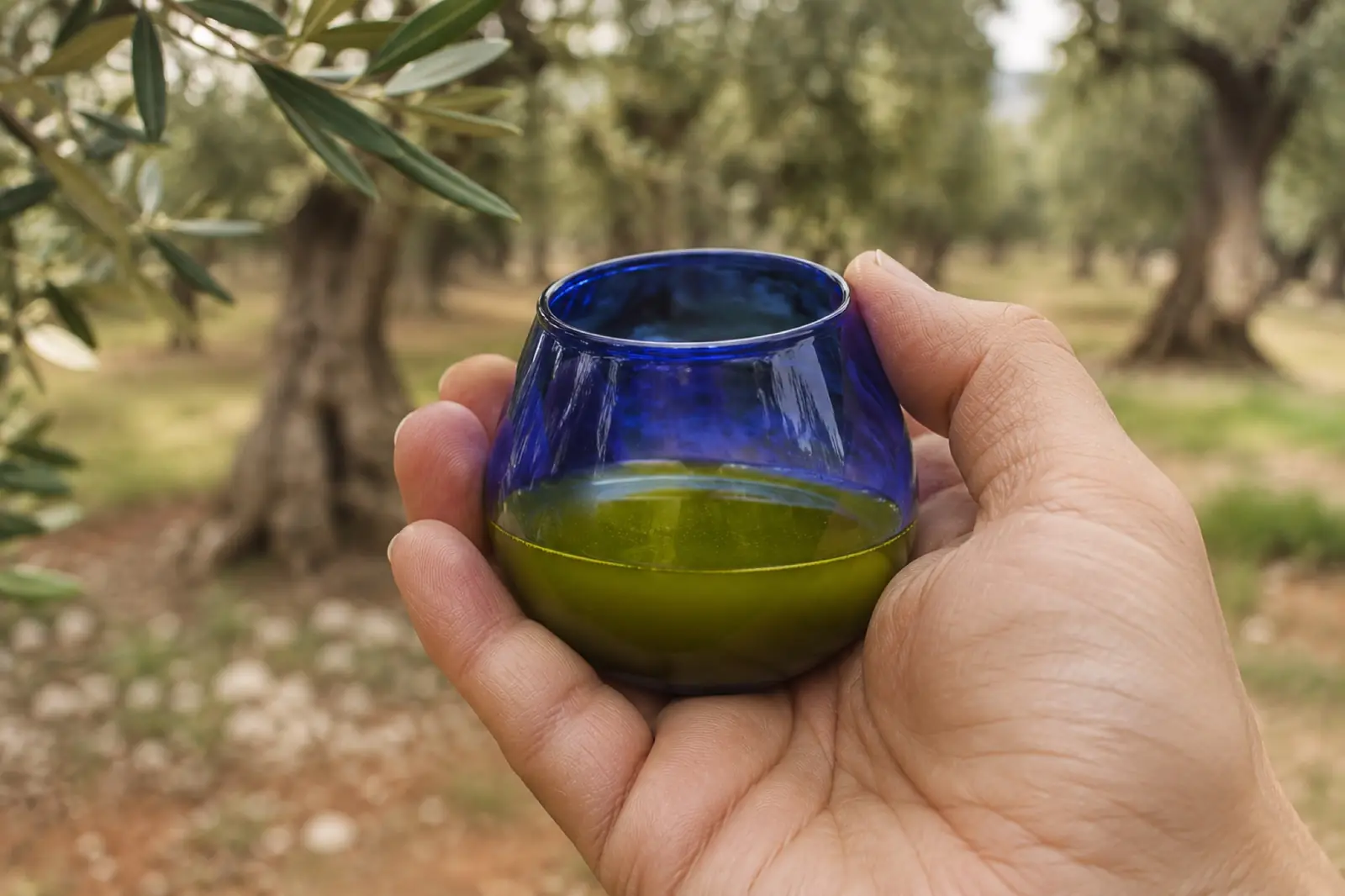
The nose and the throat
Every November someone asks me how to tell a good oil. I tell them: with your nose and with your throat. The eyes help less than you think.
My name is Michele Centrone. At Tenuta Montevitolo I am the massaro. In Puglia a masseria was a whole farm, with the house, the stores, the animals and the fields around it. The massaro was the man who lived there and looked after the work of the land for the family. I still do. The masseria is in the countryside of Andria, in northern Puglia, inland on the Murgia plateau, at about 340 metres. Castel del Monte is on the horizon.
How to taste extra virgin olive oil
Professional tasters follow a method. You can follow the same steps at home, at a kitchen table:
- A small glass, a spoonful of oil. Official tasters use dark blue glasses, so the colour does not influence them. Colour tells you little about quality.
- Warm it. Hold the glass in one hand and cover it with the other. Turn it gently for a minute. Warmth brings out the smell.
- Smell it. Uncover the glass and breathe in slowly. Look for green things: cut grass, leaves, artichoke, green tomato.
- Sip it, and draw in air. Take a little oil, then pull air in through your teeth with your lips almost closed. It is noisy. It is meant to be.
- Wait. Bitterness comes on the tongue. The sting comes in the throat, a little later. If you cough, that is not a fault.
- Clean your mouth between one oil and the next, with a slice of green apple and a sip of water.
Tasters look for three good things: fruity, bitter, pungent. They also look for faults. An oil that smells rancid, like old nuts, or of fermented olives, mould or vinegar, has a defect. By European rules, an oil can only be called extra virgin if it has some fruitiness and no defects at all.
Coratina, the olive of this land
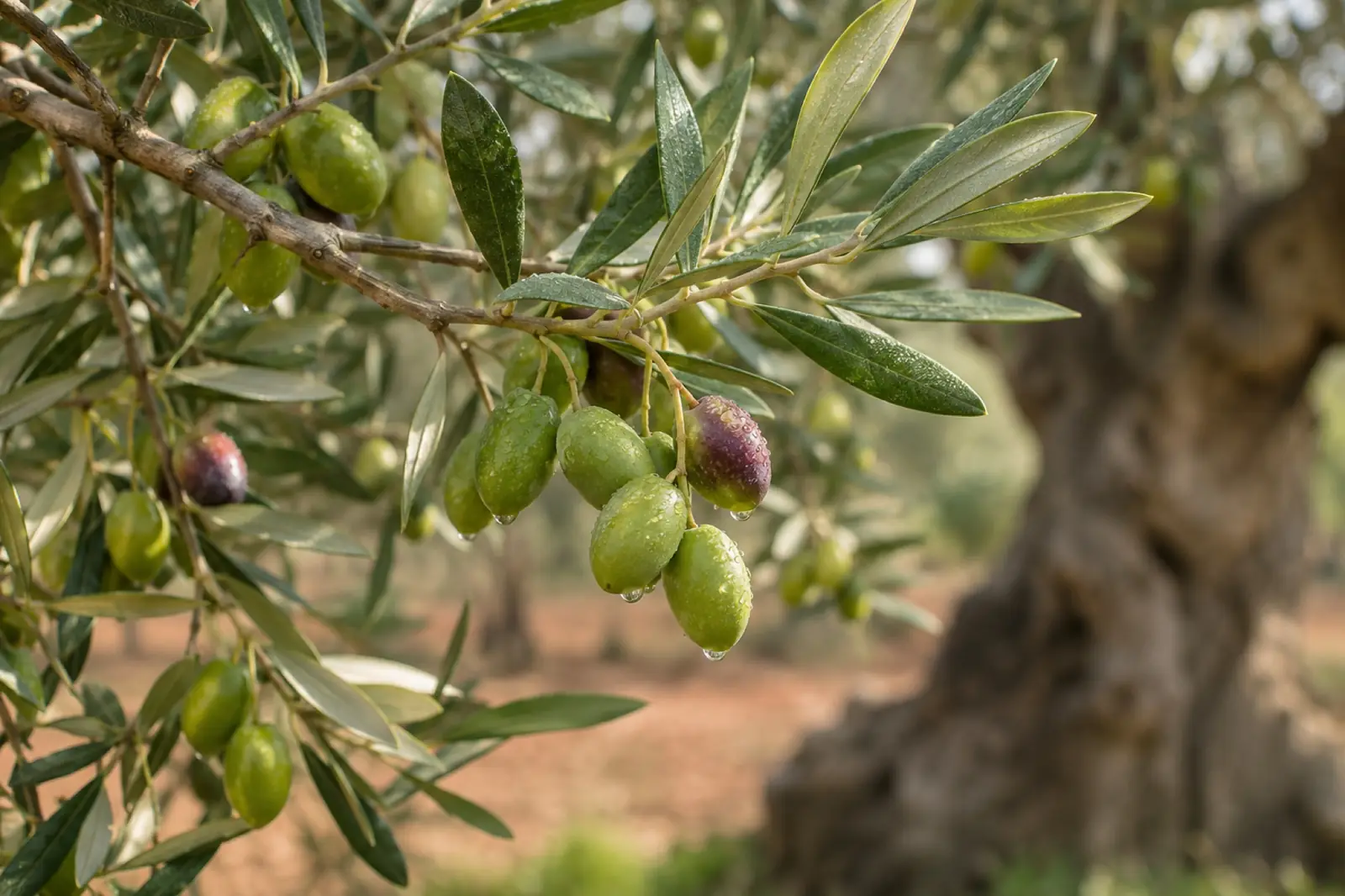
Here the olive is Coratina. It takes its name from Corato, the town next to Andria. It is a strong olive: a lot of fruit, a clear bitterness and a pepper that stays in the throat. That bitterness and that pepper come from the polyphenols, natural substances of the olive, and Coratina is known for being rich in them.
Our oil is Coratina only, from olive trees, many of them centuries old, farmed with certified organic methods since 1992.
From the tree to the mill on the same day
The harvest usually starts at the end of October. The date changes every year. The olive decides, not the calendar. We pick our olives still green: they give less oil, but more smell and more of the good things. Then they are milled cold, within a few hours, on the same day. An olive that waits loses its freshness.
In 2024 the family built a new olive mill, on more than a century of experience: an ‘Industry 4.0’ plant, designed with care for energy use and the environment. It is close to the olive groves. It works from about November to January.
This is how our oil comes out, according to its sheet. Green with golden glints. Cut grass, artichoke and green tomato on the nose. Intense fruit and an elegant bitterness in the mouth. A lively pepper at the end, long and clean.
Olio nuovo
Olio nuovo means new oil: the first oil of the season, just out of the mill. Here it comes in November. It is the greenest and the strongest it will ever be. With the months it grows softer, so if you want to know Coratina, taste it young.
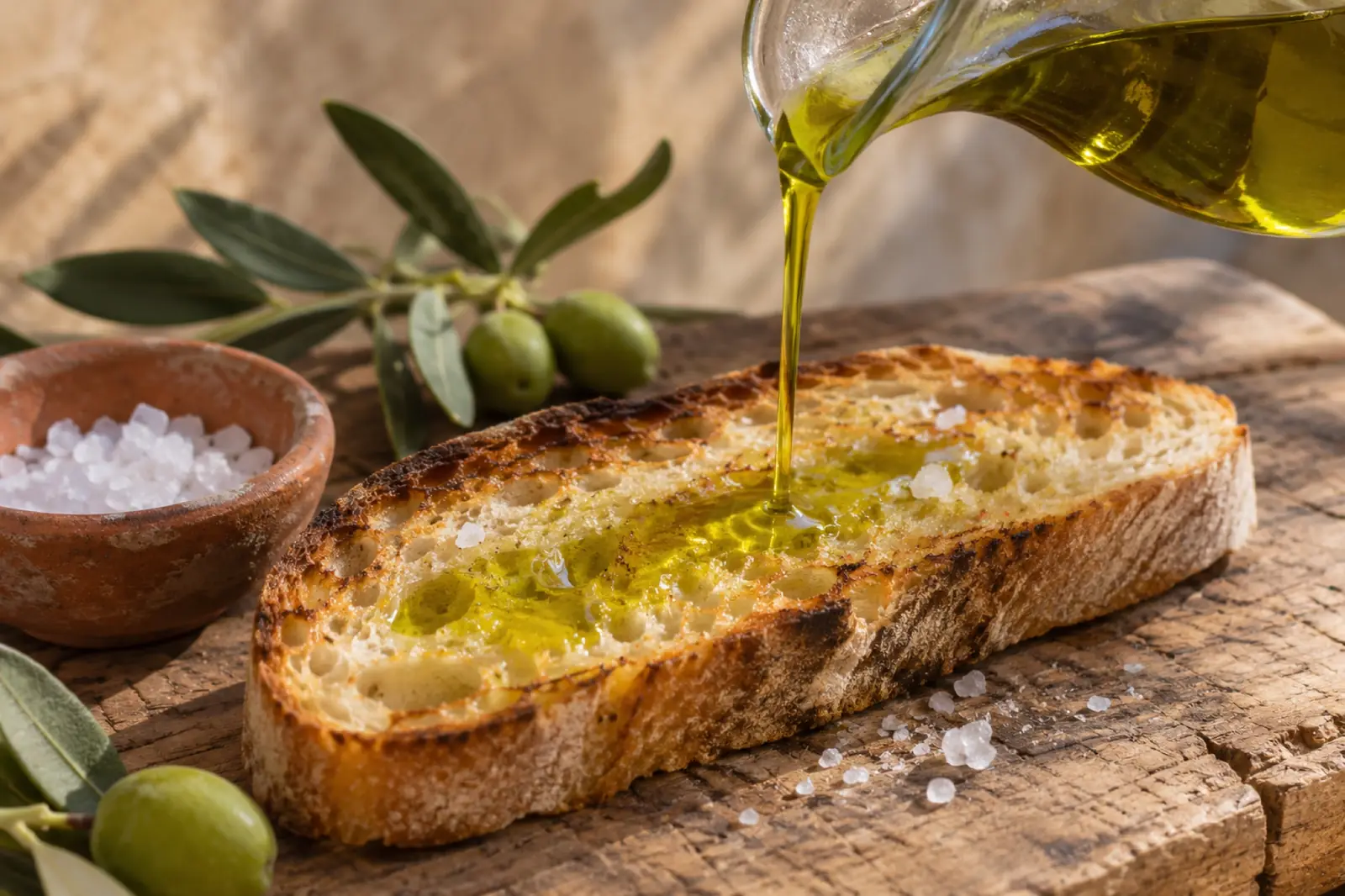
New oil wants simple food. Warm bread and a pinch of salt. Bean and chickpea soups. Bitter greens. Meat from the grill. Bruschetta. In December, long ago, Saverio Alicino, the family's great-grandfather, gave his workers bread soup at four in the morning, before the olive harvest. That is why people in Andria still call the family ‘Pancotto’, the name of that soup.
Where to taste it here
At the masseria the oil tasting is part of the olive mill visit, listed on our experiences page as ‘The olive mill among the olive trees’: seasonal, about one hour, a visit to the new mill and a taste of the new oil. Like everything here, it is by booking. Write with the date and the number of people, through the form or on WhatsApp at +39 329 449 4120; the family confirms within one working day.
It is seasonal because the mill works only when there are olives. Outside the season, you can still book the winery visit or the wine tasting; Giuseppe explains them in wine tasting near Castel del Monte. Experiences tied to the harvest have dates that change every year, and they go on our events page. For a group or a particular day, write to the family. The oil itself, in tins, is in the shop.
- Dati aziendali confermati dalla famiglia Alicino · Tenuta Montevitolo · settembre 2026
- Commission Regulation (EEC) No 2568/91 on the characteristics of olive oil and olive-residue oil and on the relevant methods of analysis · EUR-Lex