Cooking with Coratina olive oil: when to use new oil and when last harvest's
Match oil to food by intensity: a bold oil with bold dishes, a calm oil with delicate ones. New Coratina oil, bitter and peppery, goes raw on warm bread, pulses, fava bean purée with chicory, turnip tops and grilled meat. Last harvest's oil, rounder, is the one for fish, delicate vegetables, mayonnaise, baking and everyday cooking, frying included.
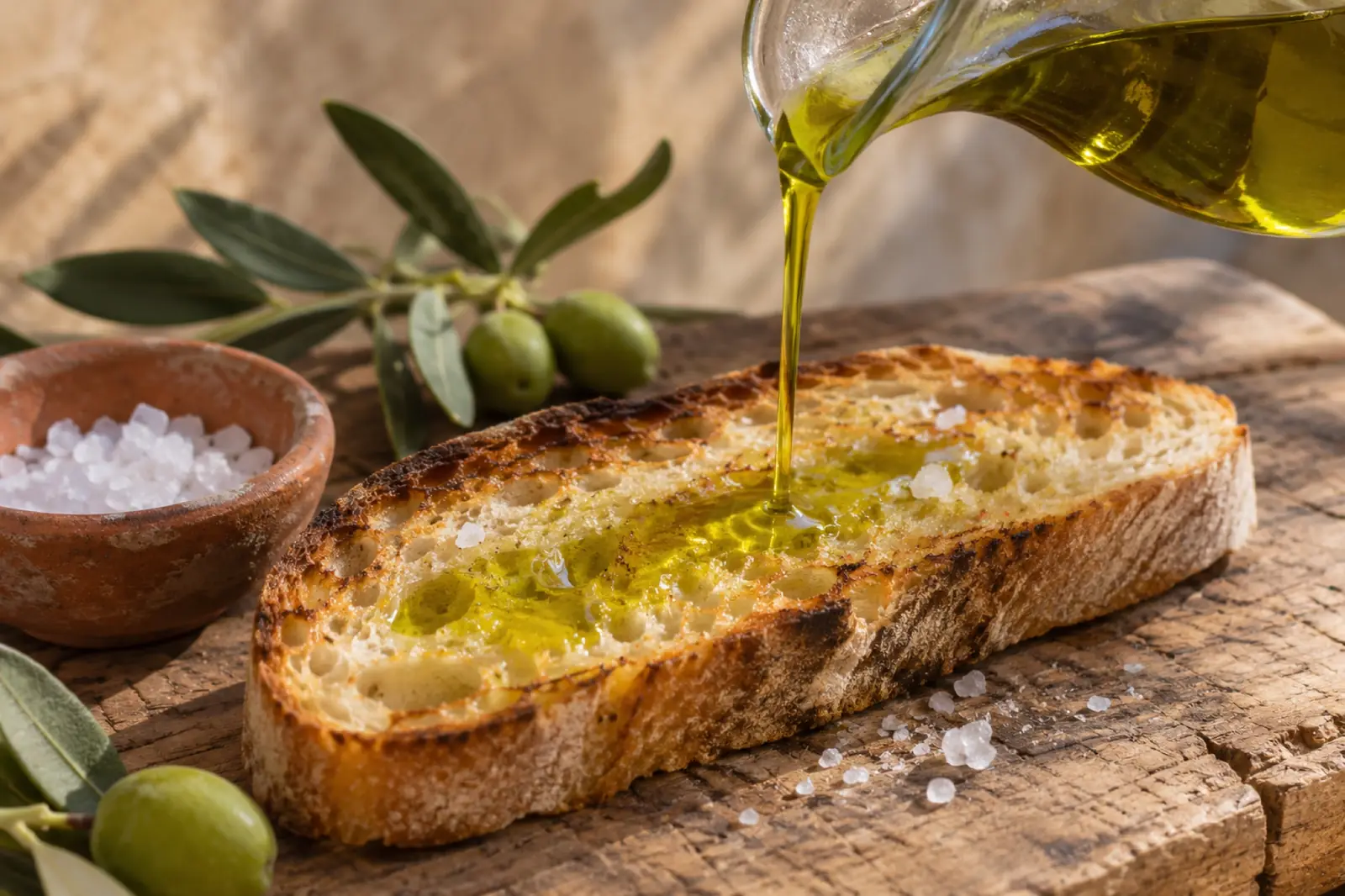
The first drizzle on warm bread
Warm bread, a pinch of salt, a drizzle of freshly milled oil. First cut grass, then bitterness, then a tickle in the throat that can make you cough. If you have never tasted new Coratina oil, start like that. You will understand at once that it is not just a dressing.
Because it is so bold, it does not suit everything. In this season there are two oils in the pantry: new oil and last harvest's, which has grown rounder over the months. Why they differ is explained by Mario in new olive oil or last harvest's. Here is how to use them.
The rule: intensity with intensity
A bold oil with bold dishes, a calm oil with delicate ones. Too strong an oil covers a delicate fish; too timid an oil disappears into a bean soup. Before dressing, taste a teaspoon: it is the quickest way to know how hard it pushes.
New oil: raw, where you can taste it
New oil is not for heating: add it raw, at the end, with the heat off, or the heat takes away the aromas you chose it for. It loves dishes with flavour and some bitterness, the dishes of Apulian peasant cooking:
- Bread and oil: toasted slices, salt, new oil, a garlic clove rubbed on top if you like.
- Fava bean purée with wild chicory (fave e cicorie): the raw oil, generous, is part of the recipe.
- Pulse soups: chickpeas, lentils, grass peas. Oil in the bowl, not in the pot.
- Turnip tops (cime di rapa): boiled and dressed, or with orecchiette.
- Bitter greens and grilled meat: the oil's bitterness stands up to both.
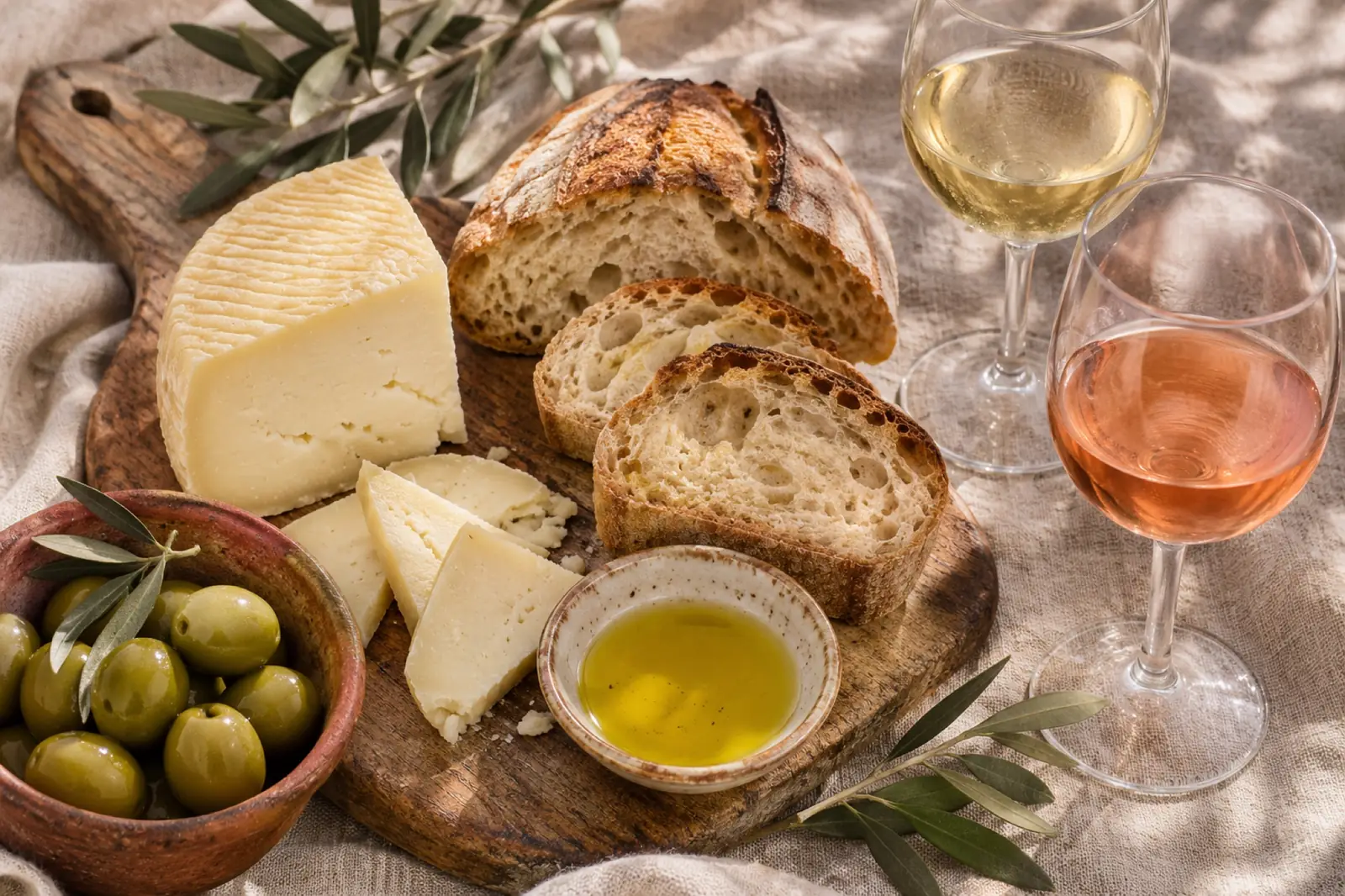
Last harvest's oil: every day
- Fish: crudo, baked or steamed fish, seafood salads.
- Raw and delicate vegetables, mozzarella and burrata.
- Mayonnaise and sauces: a very bitter oil makes a bitter mayonnaise.
- Baking: focaccia, taralli, biscuits, olive oil cakes.
- Cooking: tomato sauce, sautéed greens, pulses in the pot.
- For children: the pepperiness of new oil can be too much; the rounder oil is better.
Yes, you can fry with extra virgin
More than the famous smoke point (usually given as 190–210 °C for extra virgin, though figures vary a lot), what matters is how well an oil resists heat without breaking down, and extra virgin does well there. Keep it hot but never smoking, around 170–180 °C, and do not reuse it too many times. Fry with last harvest's oil: the aromas of new oil would be lost to the heat anyway.
From the olive to the kitchen
Our oil is pure Coratina from trees farmed organically since 1992 on the Murgia, picked green and cold-milled within a few hours in the family's 2024 mill, an Industry 4.0 plant. Technology working for quality, in the respect for tradition that nonno Saverio taught the Alicino family. For a cook it means something simple: an oil that tastes of olives, not of waiting.
Last tip: do not keep oil next to the stove. Heat and light spoil it fast. Keep a dark bottle for the week nearby and the tin closed in a cool cupboard. Our oil, in tins, is in the shop.
- Dati aziendali confermati dalla famiglia Alicino · Tenuta Montevitolo · settembre 2026
- Bitterness, pungency and phenolic compounds of extra virgin olive oil during storage · Foods (MDPI) · 2025