Wedding music, moment by moment: a running order from the ceremony to the party
Start from a map of the moments (guests arriving, the entrance, vows and signing, the exit, the aperitivo, the entrance to dinner, the cake, the first dance, the party) and decide for each one who plays, what and for how long. A civil ceremony usually needs four to six pieces; confirm the chosen titles in writing with your musicians and DJ, together with a list of songs not to play. In Italy music at an event pays copyright fees to SIAE, the Italian authors' society: at Tenuta Montevitolo they are already included.
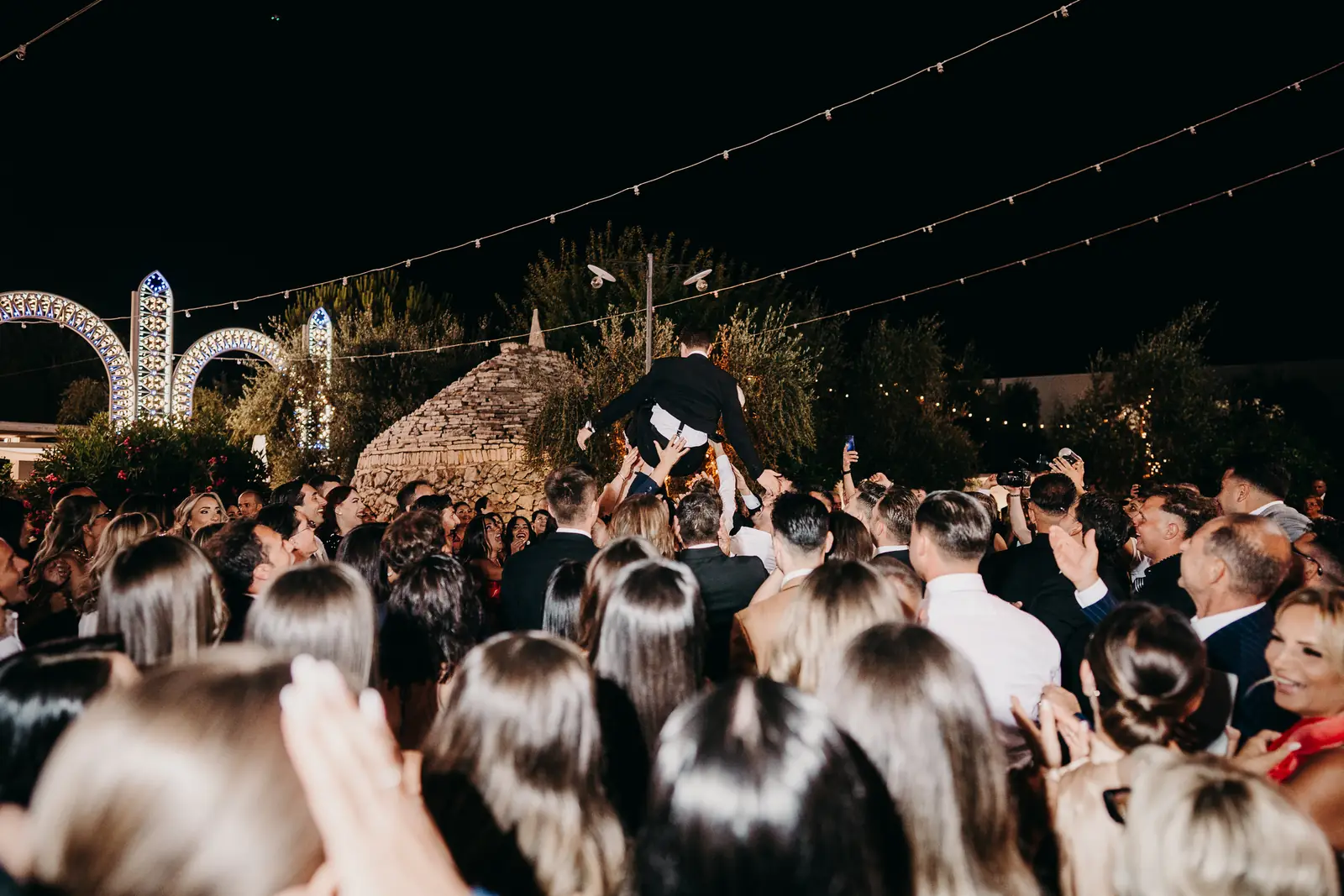
Three hundred songs and no running order
Sooner or later it always arrives: a playlist of three hundred songs. «This is our music.» Lovely, but it is not a running order. Wedding music is organised by moments, not by titles: first you decide what each part of the day needs, then you choose the songs.
The map of the moments
Write it on a sheet of paper, in order. Next to each item, note who plays, what, for how long and how loud.
- Guests arriving: soft background music while people find their seats. Twenty to thirty minutes.
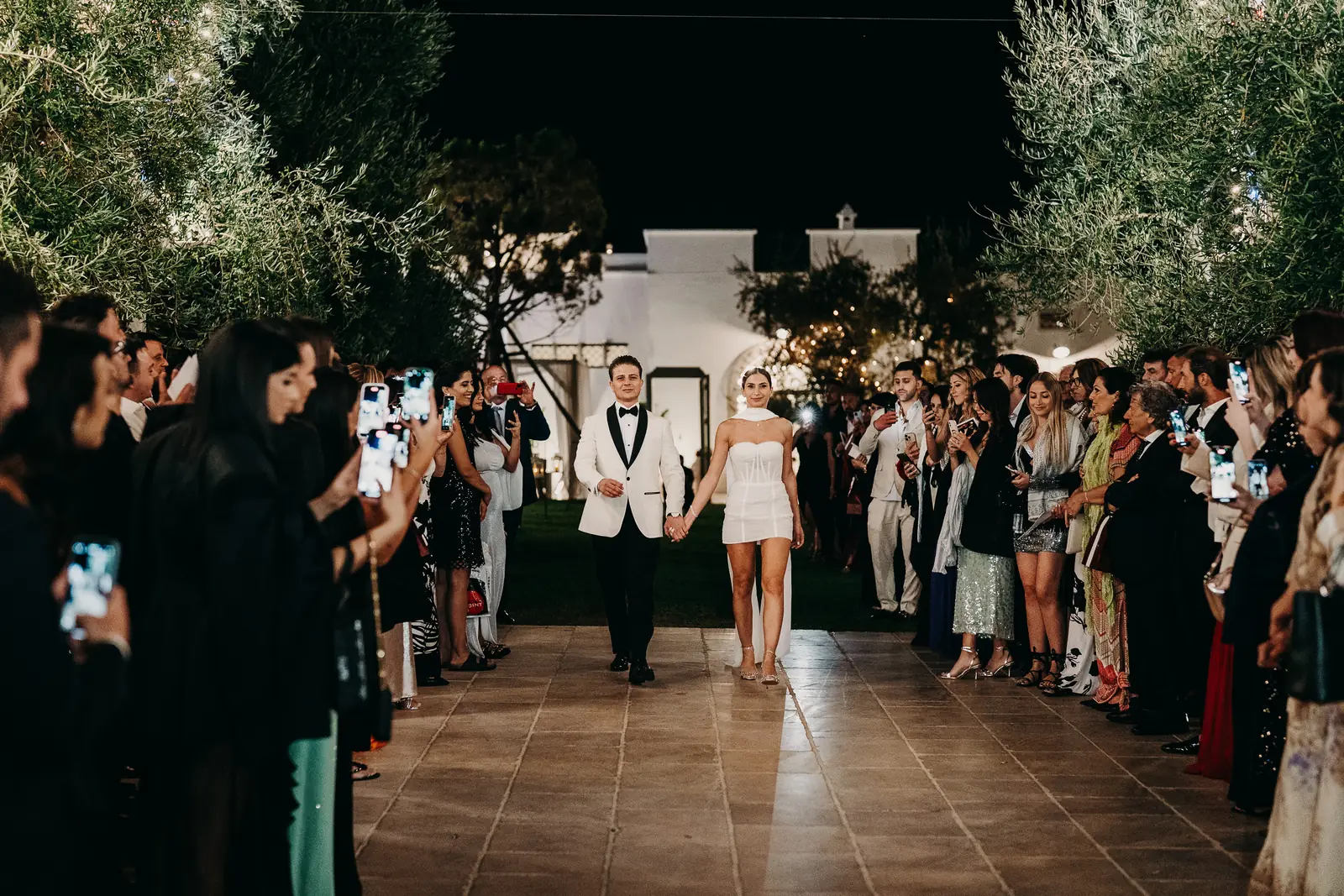
- The entrance: one piece only, the one that counts. It should last as long as the walk, with a small margin.
- Vows and signing: silence during the vows; during the signing, a piece to fill the wait.
- The exit: something joyful and full, for the throwing of the rice.
- The aperitivo: live or recorded, but leaving room to talk.
- The entrance to dinner: the piece for the couple's arrival among the tables.
- Cake and first dance: two pieces of your choice, decided well in advance.
- The party: here the DJ is in charge, following your directions.
The ceremony: four to six pieces
For a civil ceremony four to six pieces are usually enough: arrival, entrance, a reading or the signing, exit, plus one or two spare. More than that becomes a concert, and the ceremony drags. In Italy a civil ceremony is performed in Italian by the registrar or a delegate: ask whoever performs it whether there are guidelines on music and readings, and ask before you choose, not after. The paperwork is in civil weddings in Italy for foreign couples.
Outdoors, sound disperses. In an olive grove or a garden an unamplified violin reaches the front rows well and the back rows much less. A small, discreet sound system does another job too: everyone should hear the vows, not only the witnesses. One microphone for whoever officiates and one for whoever reads, tested before the guests arrive.
From dinner to party, the volume follows the evening
At dinner the music accompanies; it does not cover. If people have to raise their voices at the table, it is too loud. The volume goes up with the evening, after the cake and the first dance, and the tables of older guests sit away from the speakers.
For the party your guests can help. The guests' app has a jukebox: everyone suggests their songs and the requests go to the DJ. It is a simple way to find out what gets your friends dancing before the night begins, and with guests from two or three countries it tells the DJ which songs belong to which side of the room. Agree with the DJ how to use it, though: requests are suggestions, not orders, and the running order stays theirs and yours.
Everything in writing: songs, a do-not-play list, the fees
The rule we give every couple: every important song is confirmed in writing, with title, artist and version. The first dance starting in the seven-minute live version, when you were expecting the three-minute one, is a classic of the trade.
- The songs for the key moments: entrance, signing, exit, entrance to dinner, cake, first dance. With the order, and who gives the cue.
- The do-not-play list: the songs you do not want to hear, for taste or for memories. The DJ will appreciate it more than you think.
- Who gives the signal: one person only, who tells the musicians when to start.
- The copyright fees: in Italy, music played at an event, a wedding reception included, pays copyright fees to SIAE (Società Italiana degli Autori ed Editori), the Italian society that collects them for authors and publishers. At the masseria the SIAE fees are already included, so there is nothing for you to arrange. For any other event in Italy, such as a welcome dinner elsewhere, ask the musicians, the DJ or the venue who takes care of it and whether it is in the quote.
Four things not to do:
- Do not leave the entrance to chance: rehearse the song on the actual route, with a stopwatch.
- Do not ask the DJ to play «a bit of everything»: give them three genres and three songs you love.
- Do not leave the microphone open for surprise speeches: who speaks is agreed beforehand.
- Do not change the first dance the week before: you have already rehearsed to that one.
Music sets the pace of the day, together with timing: I cover that in wedding day flow. If you are still looking for a date, write to us: on your visit you will see the space for each moment, and we will work out together where the music goes.
- L'esperienza della famiglia Alicino con i matrimoni in masseria · Tenuta Montevitolo · novembre 2026
- Dati aziendali confermati dalla famiglia Alicino · Tenuta Montevitolo · settembre 2026
- Società Italiana degli Autori ed Editori: diritti d'autore sulla musica negli eventi · SIAE